
by Kerina Luark, LLPC
Pediatric Mental Health Clinician
Duncan Lake Speech Therapy, LLC
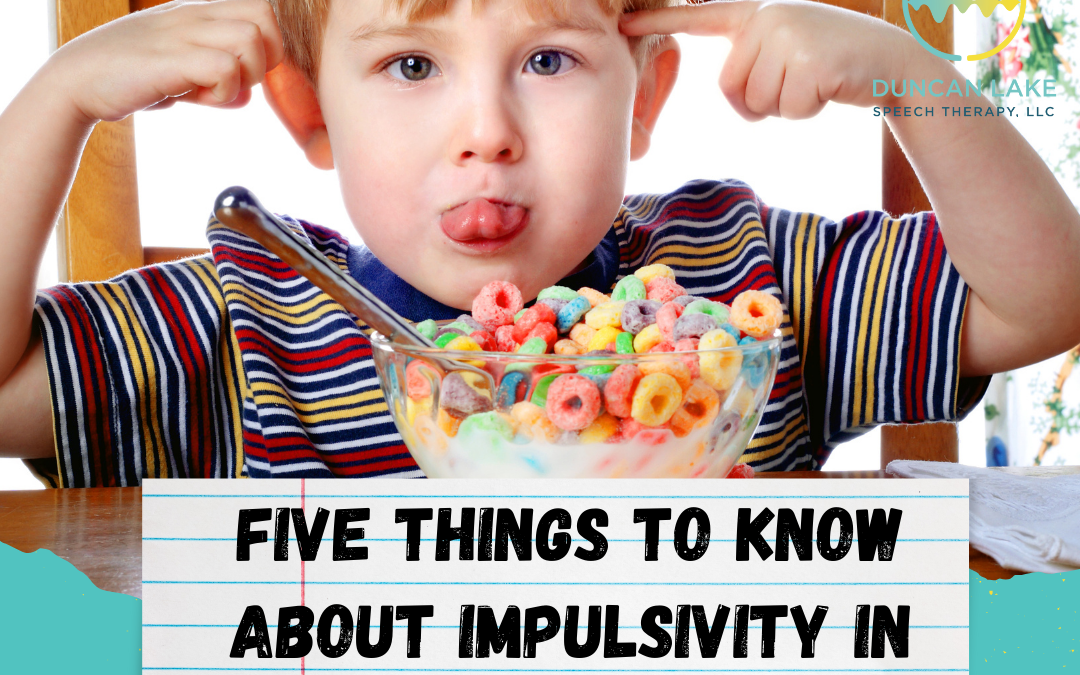
Impulsivity is often one of the first behaviors that catches adult attention. It can be frustrating, confusing, and sometimes exhausting to navigate. What’s important to know is that impulsivity is rarely about choice or intention. More often, it reflects how a child’s brain is developing and how well they can regulate, communicate, and pause in the moment.

Impulsivity is developmental
Impulse control relies on executive functioning skills that develop gradually throughout childhood. These skills help children pause, plan, and think through what might happen next. For many kids, especially younger children or those with neurodivergent profiles, these systems are still very much under construction.
It’s not (always) intentional
Most impulsive behavior is not a child choosing to ignore rules or push limits. Instead, the child’s brain may not yet be able to slow the body or the words in the moment. Knowing the expectation and being able to meet it are two very different things.
Stress makes impulsivity worse
When children are tired, hungry, overstimulated, or emotionally overwhelmed, impulse control often decreases. Stress places extra demand on the brain, making it harder for children to access the skills they use when they are calm and regulated.
Language and regulation are closely connected
Children who struggle to express their thoughts, needs, or emotions may act before they can explain. Impulsivity can be a sign that a child does not yet have the language or regulation tools to communicate what’s going on internally. In these moments, behavior becomes a form of communication.
Support changes outcomes
Impulse control improves most when adults focus on teaching skills rather than punishing behavior. Predictable routines, clear expectations, modeling calm responses, and support for communication and emotional regulation all help children build stronger self-control over time.
When we understand impulsivity as a skill that is still developing, our response can shift from correction to support. With the right strategies and environment, children can strengthen impulse control, communication, and self-regulation over time. Progress often comes from patience, consistency, and meeting kids where they are, not where we expect them to be.
Recent Comments