
by Kerina Luark, LLPC
Pediatric Mental Health Clinician
Duncan Lake Speech Therapy, LLC
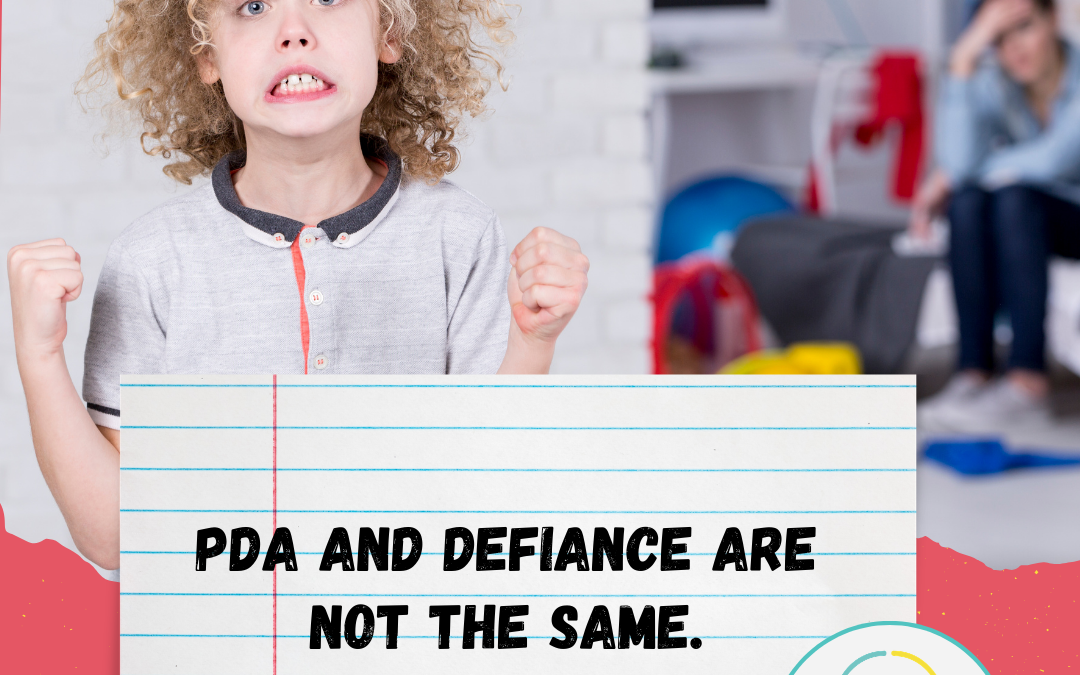
Parents, raise your hand if you have heard the phrase, “They’re just being difficult,” or “They need to learn to listen?” Ok parents, now raise your hand if your response is, “Uhhh, we’ve taught these skills and it’s still always a fight. This is how my kid’s brain works!” Folks, this happens! For some children, what looks like defiance may actually be something very different. For individuals with PDA (Pathological Demand Avoidance), sometimes described as Persistent Drive for Autonomy, resistance to everyday demands is often driven by anxiety and nervous system overwhelm rather than a desire to challenge authority or break rules. Understanding this difference can completely change how we support children (and caretakers, if we’re being honest) and make our communities a bit more inclusive and compassionate.
What Is Defiance?
When people talk about defiance, they usually mean a deliberate refusal to follow rules or instructions. In these situations, the behavior is often framed as a choice to resist authority. Because of this, knee-jerk responses to behaviors tend to focus on consequences, rewards, clear rules, and increased structure. For some children, sure, these approaches work well. However, for children with PDA, these strategies can make the situation much worse rather than better.

What Is PDA?
PDA is a profile sometimes seen in neurodivergent individuals. A key feature of PDA is a strong drive to avoid everyday demands because those demands can cause significant anxiety. These demands are not always obvious. While they can include things like being asked to clean up toys or complete homework, they can also include transitions between activities, expectations from adults, social demands, time pressure, or tasks the child already knows how to do. It can be almost any demand, direct or indirect.
Because this is a nervous system issue, children with PDA interpret demands, regardless of the complexity, as overwhelming or threatening. When this happens, the child may attempt to avoid them in order to gain a sense of control and safety.
What PDA Can Look Like
PDA can take many different forms. Some children may avoid tasks they are fully capable of completing. Others might negotiate, distract, or change the subject when a demand is presented. Humor, role play, or storytelling may also be used as a way to delay or avoid a task (hello, jokester kids)! As demands increase, some children may experience shutdowns or meltdowns. These behaviors are often misunderstood as stubbornness, manipulation, or intentional rule-breaking. A lot of times, though, they are actually attempts to manage anxiety.
When a child is experiencing demand-related anxiety, increasing pressure often increases distress. Power struggles, strict consequences, repeated commands, or statements like “because I said so” can push the nervous system in more distress. This can lead to more avoidance, more escalation, and greater frustration for both the child and the adults supporting them.
A Different Way to Support
When we approach PDA behaviors through a nervous-system lens rather than beahviors, the goal shifts from control to collaboration. Support strategies often focus on reducing unnecessary pressure, offering choices, using collaborative language, and building trust and flexibility in everyday interactions. These help children feel safer, which can make it easier for them to engage with expectations over time.
Children with PDA are not trying to be difficult, and are trying to regain control when they feel out of control. When caregivers, educators, and therapists understand the difference between defiance and anxiety-driven demand avoidance, it opens the door to more supportive and effective approaches that prioritize regulation, autonomy, and connection.
P.S. One site that we have found incredibly helpful here at Duncan Lake Speech Therapy is PDA Society based in the UK. Society has a long way to go before we’ve reached a neuroaffirming place with PDA, but this is the closest we’ve seen thus far.

Recent Comments